Research Program

Leadership
Reza Tadayon-Nejad, MD, PhD
Program Director
Contact Info
The UCLA Adult OCD Intensive Treatment Program is in person. To receive treatment in the OCD Intensive Treatment Program, individuals must first be evaluated. Please call 1-800-825-9989 option #2 to schedule an evaluation appointment for the program. After your evaluation you will either be placed on a waitlist or referred to other services.
For any questions about our admissions please email Kara Johnson at ksjohnson@mednet.ucla.edu
OCD Intensive Treatment Program
310-794-7305
About
OCD Treatment at UCLA
The UCLA Obsessive-Compulsive Disorder (OCD) Intensive Treatment Program is designed for people who have moderate to severe OCD and/or Hoarding Disorder. For OCD, our approach integrates cognitive-behavior therapy, and specifically exposure and response prevention (ERP). Our program integrate research-based cognitive-behavioral and pharmacologic approaches for the most effective outcomes of these disorders. Our program has been helping individuals with OCD since 1991. In addition, we have been forerunners in the development of successful approaches to treating Hoarding Disorder (previously a sub-type of OCD and now its own diagnostic category).
OCD Symptoms
What is OCD?
OCD is a disabling disorder consisting of distressing and time-consuming obsessive thoughts and compulsive behaviors that significantly impact one’s quality of life.
Obsessions are characterized by persistent, repetitive thoughts, impulses or images that are associated with distressing emotions such as anxiety, disgust, or guilt. Obsessions occur against one’s will, are intrusive and recurrent and are, often, personally repugnant. These can include:
- Concerns about becoming contaminated
- Concerns that something terrible might happen if something isn’t done correctly
- Concerns about causing offense
- Concerns that one may harm others or themselves, even though he/she does not want to
- The urge for things to feel just right
- Obsessive scrupulous, religious, or sexual thoughts
Compulsions are repetitive behaviors that are intended to prevent or correct some dreaded event associated with the obsessions. These can be physical or mental behaviors. People with OCD also often avoid certain situations that might trigger obsessive thoughts, or to prevent something bad from happening. Sometimes individuals with OCD test themselves or others or their environment to make sure that something bad will not happen, or that they know something sufficiently well.
Common compulsive behaviors include:
- Washing
- Checking
- Ordering and arranging
- Cleaning
- Counting
- Repeating actions
What is Hoarding Disorder?
Although Hoarding Disorder used to be considered an OCD-related disorder, it is now thought of as its own separate disorder. Regardless, it can still be effectively treated with techniques similar to, but not entirely the same, as those used for OCD.
Hoarding Disorder is defined as the acquisition of, and the failure to discard a large number of possessions that other people would consider useless or of limited value. In addition, living or work spaces are so cluttered that they preclude activities for which those spaces were intended. And, significant distress or impairment in functioning is caused by the hoarding behavior.
Hoarding Disorder is fueled by four fundamental problems: a difficulty with making decisions, a need to do things perfectly, difficulty organizing, and behavioral avoidance. Treatment for hoarding will target these four issues simultaneously. This disorder can be effectively treated in the clinic setting provided the person with hoarding is willing and able to bring a steady supplies of boxes of their clutter to the clinic so that they can practice addressing the issues inherent to Hoarding Disorder.
Our Program
The UCLA OCD Intensive Treatment Program was started in 1991 and was the first program of its kind. Participants work one-on-one with licensed therapists and psychiatrists who specialize in treating OCD. The UCLA program has published data on the effectiveness of the treatment in peer-reviewed journals and currently we are evaluating the longer term effects of participation in the program on quality of life, OCD symptoms and relapse. Over the years, our program has grown to provide training to psychiatry residents and psychology doctoral students.
The usual requirement for admission to the program is that the individual has already tried outpatient CBT and medication management but did not respond sufficiently. Each individual admitted to the program must already have an outpatient therapist and be receiving medication treatment from an outpatient psychiatrist. Patients need to be free from cannabis and any drugs not prescribed by a doctor for 3 months prior to attending the program.
Treatment
What does the treatment consist of?
The UCLA OCD Intensive Treatment Program is a comprehensive program that integrates individual therapy, group therapy, medication management with psychiatrists who specialize in OCD, and family education and support. The program primarily utilizes daily, individual exposure and response prevention (ERP) therapy to help reduce OCD symptoms. ERP is a form of cognitive-behavioral therapy that is based on the fact that prolonged and direct contact with a fearful stimulus, without engaging in compulsive behaviors or avoidance, can diminish anxiety and other distressing emotions. There is considerable research support for the effectiveness of ERP in significantly reducing OCD symptoms.
Two major advantages of the program, especially for those who have not responded well to outpatient treatment, are: 1) the treatment is supervised, such that each individual will be doing ERP exercises while being observed to ensure that they are done correctly; and 2) the treatment is intensive, in that these exercises are repeated every day, usually multiple times per day.
How is the treatment structured?
The UCLA OCD Intensive Treatment Program is an Intensive Outpatient Program (IOP) that operates from 9 -1 p.m., Monday through Friday. The usual length of treatment is 30 days (6 weeks). The program was previously referred to as the OCD Partial Hospitalization Program.
On admission to the OCD Intensive Treatment Program, each participant is assigned a cognitive-behavioral therapist with whom they will work daily on a one-on-one basis. The program’s cognitive-behavioral therapists have extensive training and experience in treating OCD.
The first week in the program involves a detailed and specific assessment of each participant’s OCD and related problems; this involves questionnaires, interviews and self-monitoring of OCD symptoms. Based on this information, participant, therapist and psychiatrist can establish a personalized program of ERP therapy.
In the subsequent weeks, the therapist and psychiatrist implement an individualized behavior therapy regimen in the context of a highly structured program of education and support. In addition to one-on-one therapy with their therapist, participants also do supervised ERP exercises with trained behavioral coaches. Individuals are expected to do assignments on their own, as their anxiety allows. Each participant is guided to reach the top of their hierarchy of fears by the end of their third week. Remaining weeks will be spent practising the most difficult exposure assignments until they can be done comfortably with minimal distress. Participants also are assigned a psychiatrist who will comprehensively assess and review symptoms and treatment histories in order to ensure that their medication regimens are optimized. Participants additionally take part in daily therapeutic groups. Homework is a significant component of this treatment as participants must learn how to translate their newly-learned cognitive and behavioral skills to the home situation.
Will my family be involved?
Education of, and support from, family or loved ones can be important parts of treatment. Often, those people living with someone who has OCD have questions and concerns about how best to help. The program will provide support and information on how to cope with and help a loved one who has OCD. This will be achieved both on an individual basis and in a support group setting. Each participant in the program will be encouraged to meet with their family and their therapist to review specific ways the family can support the therapy, and take care of their own needs. In addition to individual meetings, the program has a support group for family members and loved ones which is held every alternate week. Family members and loved ones are strongly encouraged to attend at least two of these groups.
What can I expect by the time I’m finished with treatment?
As individuals with OCD may have a variety of different types of symptoms, other psychiatric conditions, and life circumstances, the response to treatment can vary. However, individuals with OCD who complete 6 weeks of treatment in the program have experienced on average a 40-47% reduction in symptoms, based on the Yale-Brown Obsessive-Compulsive Scale (YBOCS) (Bystritsky et al., 1996; Bystritsky et al., 1999). These improvements have been demonstrated to be maintained at 6, 12, and 18 months after completion of the program (Bystritsky et al., 1996). Individuals with compulsive hoarding have also been demonstrated to improve with treatment in this program (Saxena et al., 2002, 2004 & 2011).
For many people with OCD their symptoms make work and social functioning very difficult. One of the major goals of this program therefore is that each participant should be able to accomplish at least one of the following by the end of the program: return to work or a volunteer position, enroll in a class or educational program, or be able to live more independently.
Some participants may benefit from our weekly support group for those who have completed the Intensive Treatment Program. The one-hour, weekly group helps participants feel supported and prepared as they transition back into the bigger world and outpatient therapy. Members of the group utilize the insights and encouragement of peers to feel less isolated and alone as they make this difficult transition.
Will the program “fix” my OCD or Hoarding Disorder?
Treatment in the OCD Intensive Treatment Program provides an extremely helpful boost towards improvement for most participants. However, it is unrealistic to expect that treatment in the program alone will “fix” the problem. Both OCD and Hoarding Disorder are chronic conditions that require months or years of treatment for one get to a point at which the symptoms are manageable and not interfering with one’s life. However, this can be achieved with the correct treatment, persistence, and hard work.
Follow-up with outpatient CBT and medication management is crucial to maintain gains and for continued improvement. Because of this, we emphasize relapse prevention strategies and begin helping individuals plan for follow-up treatment almost as soon as they start the program.
What makes this program different from other treatment programs?
The UCLA OCD Intensive Treatment Program was started in 1991 and was the first program of its kind. Participants work one-on-one with licensed therapists and psychiatrists who specialize in treating OCD. The UCLA program has published data on the effectiveness of the treatment in peer-reviewed journals (see References, below). The program accepts most forms of insurance, unlike many newer programs. Because of its reputation and long history of effective treatment, over the years many participants from across the United States and from countries around the world have traveled to UCLA to receive treatment in the program.
How do I get screened for admission to the program?
To receive treatment in the OCD Intensive Treatment Program, individuals must first be evaluated. Please call 1 800 825-9989 option #2 for an appointment for an evaluation for the OCD Intensive Treatment Program. The program accepts most insurance policies including Medicare.
The OCD program is dedicated to making services more accessible to patients outside of the immediate Los Angeles area. Individuals who reside out of state or out of the country can request to have an appointment for a remote evaluation to be screened for the OCD program, using web based technologies that are HIPAA compliant. This means the information is securely transmitted and is treated the same way it would be if you were meeting with your evaluator in person. This appointment is a cash pay service that is not covered by insurance. To set up a remote evaluation please contact Shana Doronn, PsyD, LCSW, program coordinator, at SDoronn@mednet.ucla.edu.
For more information about the UCLA OCD Intensive Treatment Program call (310) 794-7305 or email Kara Johnson, LMFT at ksjohnson@mednet.ucla.edu.
Strengths of Program
Strengths of the UCLA OCD Intensive Treatment Program
The UCLA Adult OCD Intensive Outpatient Program (IOP) was the first of its kind in California and one of the first in the country. It has been providing the highest quality of care to the OCD community since 1990 and has been a model for other treatment programs around the world.
There are many reasons to consider our exceptional program:
Insurance Coverage. We accept many forms of insurance including Medicare. Most of our patients are able to use their insurance for treatment in our program.
Treatment by a multidisciplinary team of experts. The UCLA OCD IOP is a highly individualized treatment program with four licensed experienced therapists from diverse disciplines (social work, family therapy, psychology), all with extensive experience in Cognitive-Behavioral Therapy (CBT), with an emphasis on Exposure and Response Prevention (ERP). Patient and therapist work together to design a treatment plan, and our multidisciplinary treatment team meets weekly to review all cases and provide treatment input. Our team also includes two board-certified OCD-specialist psychiatrists, who optimize patients’ medications and meet with patients weekly. Our psychiatrists are full-time faculty members at UCLA who also teach and conduct OCD research, which puts them at the cutting-edge of patient care, new treatment development, and understanding brain-behavior relationships in OCD.
Intensive, Individualized treatment. The core treatment for our program is cognitive -behavioral therapy, specifically, Exposure and Response Prevention (ERP). ERP is a well-established first-line treatment for OCD whose efficacy is supported by multiple randomized clinical trials over several decades. Our program is 6 weeks long (30 treatment days), 5 days per week, and 4 hours per day. ERP comprises about 75% of program time. Our individualized treatment program provides one hour of one-on-one daily individual therapy with a licensed clinician, 2 hours of ERP with a behavioral coach, one hour of daily group therapy, and one weekly appointment with a psychiatrist. We also have a family support group every other week and a weekly alumni group for patients who recently finished the program.
Outstanding Treatment Outcomes. Our data shows a high degree of symptom improvement, despite high average symptom severity at admission and having not responded adequately to prior outpatient CBT and medication treatments:
42% average reduction in OCD symptoms assessed with the YBOCS-II in the past 151 patients who completed treatment in our program.
At admission, average YBOCS-II score was 37.7 (SD=5.86) and at termination it was 21.70 (SD=6.51).
The YBOCS-II measures symptom severity from 0 to 50 and is an advance over the traditional YBOCS in that it also measures avoidance behaviors.
40% average reduction in depressive symptoms assessed by the Beck Depression Inventory (BDI) in 124 patients.
At admission, average score was 20.08 (SD=11.20) and 11.54 (SD=9.49) at discharge.
31% average general improvement in functioning, measured by the Global Assessment of functioning (GAF) in 124 patients.
Their baseline score was 47.38 (SD=5.41), and at discharge it was 61.67 (SD=9.19) (higher scores indicate better functioning).
Treatment in Spanish / Tratamiento en Español. Our team includes a bilingual therapist and behavioral coaches that are able to provide treatment to Spanish speaking patients. Nuestro equipo incluye un terapista y entrenadores conductuales bilingües que pueden hacer tratamiento en español.
Focus on improving functioning. Our treatment goals go beyond symptom reduction and focus on improving patients’ general level of functioning by returning to work, school or having a volunteer position by the time of discharge. We focus on patient’s strengths to help them live a valued life.
A small and cohesive therapeutic environment. Each therapist works with no more than two patients at a time, and there are no more than eight patients in the program at any given point. This allows for an intimate and supportive environment where patients develop into a cohesive group, and frequently form close relationships.
Involvement of significant others. Family members, loved ones, and other members of the patient’s treatment team are included in the treatment plan, with patients’ permission. Family members and loved ones often welcome support and education, and may need guidance on how to reduce accommodations that enable the patient’s symptoms. Families also often benefit from discussing prognosis and expectations for treatment, as well as planning follow up care. We offer a support group for significant others while patients are in our program.
Treatment of co-occurring disorders. The program is devoted to treating individuals with OCD, but also addresses other co-occurring, or “comorbid” disorders (e.g. social anxiety, panic, depression, or other obsessive-compulsive related disorders). Additionally, the program offers a highly specific treatment program for individuals with Hoarding disorder.
Integrated Transcranial Magnetic Stimulation (TMS) treatment for comorbid depression. In conjunction with the UCLA TMS Clinical and Research Program, we offer integrated treatment of comorbid treatment-resistant depression. Treatment can be done prior to the 6 weeks in the OCD program or during the 6 weeks of the program.
Diversity. Our program welcomes all individuals, without regard to race, sex, sexual orientation, gender identity, religion, national origin, or disabilities. Additionally, our staff is also able to provide services in Spanish, German and Portuguese. The patients in our program reflect the diversity of the Los Angeles community.
TESTIMONIES FROM PRIOR PATIENTS:
“I was impressed with the staff as a whole and how involved all the therapists were in my treatment even if I wasn’t working directly with them. They all had an awareness of my OCD symptoms which made groups more applicable to my case, and I felt very well taken care of.”
“Honestly, this program is so helpful that it was life changing. It completed changed my life and I am so thankful for all these things.”
“I am forever grateful for all the help, guidance, expertise and exposure that I received from you!”
“The staff was absolutely amazing and helpful at all times”
Adjunct Treatments
TMS
The non-invasive brain stimulation method of Transcranial Magnetic Stimulation (TMS) is an evidence-based treatment approach that is currently used for treatment of depression and, more recently, OCD. In collaboration with the UCLA division of Neuromodulation, coordinated TMS treatment is available for patients with depression-comorbid-with-OCD, targeting both their depressive and OCD symptoms. TMS treatment can be applied before, after or even during the participation in our OCD Intensive Treatment Program.
Our Staff
-
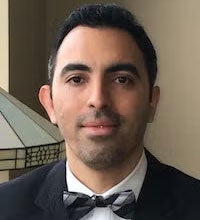
Reza Tadayon-Nejad, MD, PhD
Program Director -
Ana Ribas, PhD
Assistant Clinical Director, Training Director, Cognitive-Behavioral Therapist -
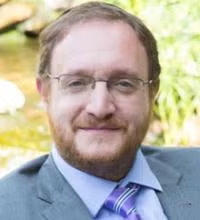
Tom J. Cohn, LMFT
Cognitive-Behavioral Therapist -
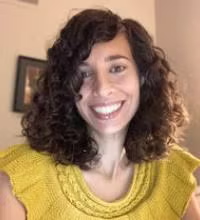
Margaret Distler, MD
Program Psychiatrist -

Denise Nelson, PhD
Family Cognitive-Behavioral Therapist -
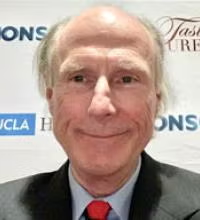
David Kronemyer PhD
-

Yuri Tsutsumi, PsyD
Psychologist, Cognitive Behavioral Therapist -
Kara Johnson, MA, LMFT
Training
TRAINING OPPORTUNITIES
The Adult OCD Treatment and Research Practicum provides training opportunities to learn and conduct exposure and response prevention (ERP), a form of cognitive behavior therapy (CBT) that has consistently demonstrated very strong efficacy in treating Obsessive Compulsive Disorder (OCD). We offer training programs for:
- Psychiatry Residents
- Psychology Interns
- Psychology Pre-Doctoral Practicum Students
In our program, we have dedicated staff therapists and staff psychiatrists that oversee traditional CBT and medication management. This allows residents, interns, externs and therapists who rotate through our program to focus on learning ERP, an important form of exposure therapy while also being integrated into a multidisciplinary team.
What is exposure and response prevention (ERP)?
In ERP, patients are guided through specific situations to come in direct contact with fearful stimuli without engaging in compulsive behaviors or avoidance in order to help patients learn new ways of relating to and handling rapid and prolonged surges in anxiety and other intense negative emotions. Adult patients attend the OCD Intensive Treatment Program Monday-Friday for 6 weeks, from 9am-1pm. Each day, they have 1 hour of therapy, 1 hour of group therapy and 2 hours of ERP.
What patients will you work with?
Our program specializes in treating individuals diagnosed with OCD and related disorders. Greater than 90% of our patients with OCD also have a comorbid mental health disorder, including a mood disorder and an anxiety disorder. Most typically our patients also struggle with social anxiety disorder, panic disorder, generalized anxiety disorder, post-traumatic stress disorder, or other obsessive compulsive and related disorders such as body dysmorphic disorder, trichotillomania, or excoriation disorder. Another major strength of our program is that we work with individuals with a primary diagnosis of hoarding disorder; approximately 10-20% of our patients in our clinic suffer from this problem.
What will you learn?
Residents, practicum trainees, interns, and licensed therapists will receive training in 1) assessment of OCD, hoarding, and comorbid disorders; 2) behavioral treatment, specifically ERP and exposure based approaches for other anxiety and stress disorders, treatment for compulsive hoarding; and optionally, 3) co-running one of our five groups, and additionally, 4) conducting research with OCD patients.
Regarding assessment, individuals receive training conducting and interpreting standardized assessments (including the Yale-Brown Obsessive Compulsive Scale as well as other measures) and creating and refining exposure hierarchies. ERP training starts out with observation of staff therapists conducting ERP, one-on-one role playing and review. Next, the resident will conduct exposure sessions in conjunction with staff therapists.
After this, our trainees and residents begin conducting exposures on their own with patients. Based on their availability and interest, residents or trainees can also assist in one weekly group therapy session (we run 5 different groups covering a diverse set of topics including goal setting, coping skills, didactics, cognitive and relapse prevention). If interested, the resident also has opportunities for research experience supervised by Dr. Motivala and program director Dr. Reza Tadayon-Nejad. In one on-going project, we are conducting a follow up study in program completers to gauge the durability of treatment effects and examine which factors improve or worsen OCD symptoms over time.
Directors/Instructors:
Training Director: Ana Ribas, PhD
Program Director: Reza Tadayon-Nejad
Please contact Ana Ribas, PhD at ACRibas@mednet.ucla.edu for more information.
PSYCHIATRY RESIDENT TRAINING PROGRAM
Residents interested in OCD and anxiety disorders have a unique opportunity to get training exclusively in behavior therapy. Whereas other clinics offer opportunities in learning the specifics of psychopharmacologic treatment, our clinic focuses exclusively on exposure based cognitive behavior therapy. Residents work in our clinic for 4 hours a week over a minimum 6-month rotation. Residents typically come in one morning a week, from 9am to 1pm.
Summary of Topics Covered in Formal Didactic Seminar:
- Introduction to OCD
- OCD-Related disorders
- Hoarding disorder, including common comorbidities
- Naturalistic course of disorder
- Neurophysiological and learning theory based models of OCD development
Treatment approaches:
- Understanding exposure therapy from the basis of learning theory
- Fear conditioning and inhibitory learning
- How to develop a fear hierarchy
- How to interpret and use self-report and observable cues of affect triggering during exposure
- How to pace and modify an exposure session
How to Apply:
Please contact our psychiatry director Reza Tadayon Nejad, MD., PhD at RTadayonNejad@mednet.ucla.edu for more information about doing a psychiatry rotation at the OCD program.
PSYCHOLOGY INTERN TRAINING PROGRAM
Rotation Hours and Commitment:
This rotation is set up to be an elective Adult Clinical Program Track. It involves 5 hrs/week on either Mondays, Tuesdays or Thursdays for a minimum of four months. This includes 3 hours of ERP work and 1 hour of group or individual supervision. Following a period of observation and training, you will work directly our patients specifically to run exposure and response prevention sessions. Interns receive training conducting and interpreting the Yale-Brown Obsessive Compulsive Scale-II and creating exposure hierarchies. ERP training starts out with observation of currently trained students and staff therapists conducting ERP, one-on-one role playing and review. Next, the intern will conduct exposure sessions in conjunction with staff therapists. After this, trainees begin conducting exposures on their own with patients. Based on intern availability and interest, the intern could also assist in one weekly group therapy session (we run 5 different groups covering a diverse set of topics including goal setting, coping skills, didactics, cognitive reframing and relapse prevention).
How to Apply:
Please contact Ana Ribas, PhD at ACRibas@mednet.ucla.edu for more information.
Evaluated by Dr. Kronemyer
PSYCHOLOGY GRADUATE STUDENT PRACTICUM
Practicum hours & commitment:
Trainees typically devote 8-10 hours (typically over 2-3 days); starting/ending dates are flexible and the time commitment is for 12 months.
Supervision:
Trainees in our training program receive group supervision for 1 hour a week provided by a licensed clinical psychologist covering assessment, treatment planning, and ERP. We offer a second optional hour of didactic supervision that includes journal article reviews, didactics and research topics related to OCD. In addition, informal supervision (curbside discussions, phone calls, emails, etc.) is typical and all therapists are available for consultation if an urgent situation arises. Documentation includes a supervision log, written feedback by supervisor of strengths, areas to work on and overall review. At the end of rotation, extern will fill out an extern evaluation form (modeled after UCLA Semel Institute teaching evaluation form).
Who can Apply?
Applicants for this practicum must either be PhD students in UCLA Clinical Psychology Program or be PhD or PsyD students in a graduate program that has an existing Memorandum of Understanding (MOU) with UCLA.
How to Apply:
Candidates are required to submit a letter of interest, a curriculum vitae, two letters of references, a testing log, a letter from the Training Director of the School attesting to the student’s qualifications, and evidence of professional liability coverage provided by the candidate’s doctoral training program. To: Ana Ribas ACRibas@mednet.ucla.edu
Research
Brief (10 min) survey from McMaster University in Canada about how people with OCD are coping with COVID-19. http://fhswedge2.mcmaster.ca/redcaps/macanx/surveys/?s=qTp3nV
The Loop Study (Longitudinal Outcomes in OCD Project) is a long-term follow up study of individuals who completed the UCLA Intensive Outpatient Program. Participants are followed over a one year period and are asked about OCD symptoms, depression, stress, sleep and social support.
There are two ongoing OCD research projects for which we are actively recruiting OCD participants. Below is the relevant information. Please contact us if you are interested.
Decision-making in OCD: an fMRI and TMS study
Do you have Obsessive-Compulsive Disorder?
Decision-making in OCD: an fMRI and TMS study
- Have thoughts or fears that don’t make sense but still make you feel bad?
- Have to check or do things over and over again?
- Wash excessively or avoid touching things for fear of contamination.
We are looking for people with OCD to participate in a study providing these benefits:
- Diagnostic Evaluation
- Magnetic Resonance Brain Imaging
- $150 compensation for your participation in the study
You may be eligible if you:
- Are 18-65 years of age
- Are in good physical health
- Have no history of certain other psychiatric illnesses
Purpose of study: In this UCLA research study, we want to look at what happens in the brain when people with OCD pick choices during two simple decision-making tasks on a computer screen. We also want to use non-invasive brain stimulation methods called Transcranial magnetic stimulation (TMS) which is a safe and well-tolerated to see how it can change the way research participants decide and select choices. This is not a treatment study.
Study conducted by Reza Tadayon-Nejad, MD, PhD and Jamie Feusner, MD
UCLA OCD Research Program, Semel Institute for Neuroscience and Human Behavior at UCLA
For more information, please contact Emmily Hovhannisyan at EHovhannisyan@mednet.ucla.edu 310-794-0331
Decision-making in OCD: Imaging and Neurostimulation
Do you have Obsessive-Compulsive Disorder?
Decision-making in OCD: Imaging and Neurostimulation
- Have thoughts or fears that don’t make sense but still make you feel bad?
- Have to check or do things over and over again?
- Wash excessively or avoid touching things for fear of contamination.
We are looking for people with OCD to participate in a study providing these benefits:
- Free Diagnostic Evaluation
- Free Magnetic Resonance Brain Imaging
- Free EEG
- 150$ compensation for your participation in the study
You may be eligible if you:
- Are 18-65 years of age
- Are in good physical health
- Have no history of certain other psychiatric illnesses
Purpose of study: In this UCLA research study, we want to look at what happens in the brain when people with OCD pick choices during two simple decision-making tasks on a computer screen. We also want to use a non-invasive method called transcranial direct current stimulation (tDCS), which involves passage of a small electrical current that is safe and well-tolerated to see how it can change the way research participants decide and select choices. This is not a treatment study.
Study conducted by Reza Tadayon-Nejad, MD, PhD and Jamie Feusner, MD
UCLA OCD Research Program, Semel Institute for Neuroscience and Human Behavior at UCLA
For more information, please contact Emmily Hovhannisyan at EHovhannisyan@mednet.ucla.edu 310-794-0331
The goals of the UCLA Adult OCD research program are to better understand the brain and behaviors and how they relate to OCD symptoms, mechanisms of therapeutic improvement, prediction of response to treatment, and development of effective treatments. Our research program includes studies funded by the National Institutes of Health and the Brain & Behavior Research Foundation.
Recent Publications
- Brain scan and artificial intelligence could help predict how OCD will improve with treatment with exposure and response prevention (a type of cognitive-behavioral therapy for OCD) Download Article: https://www.pnas.org/content/115/9/2222
- Behavioral therapy results in widespread and strong increases in connectivity in brains of people with OCD Download Article: https://www.nature.com/articles/tp2017192
- Depression severity in OCD may be explained by differences in brain connectivity, and is influenced by the neurotransmitter glutamate
- How efficiently brains are wired in OCD may predict who will relapse after receiving exposure and response prevention
- Dr. Feusner’s video of the Brain Mapping Seminar from 05/02/19: What functional connectivity can tell us about illness states, mechanisms of treatment, and clinical outcomes in obsessive-compulsive disorder
- New study of neural function in OCD and how it is affected by treatment with exposure and response prevention
- Cognitive behavioral therapy normalizes brain abnormality in OCD patients Download Article: https://link.springer.com/article/10.1007/s11682-020-00358-8