Event
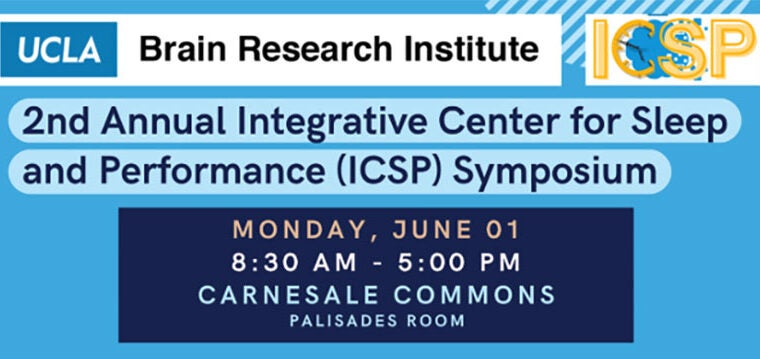
2nd Annual Integrative Center for Sleep and performance (ICSP) Symposium
June 01, 2026
Monday June 1 8:30 AM – 5:00 PM Carnesale Commons Palisades Room Register here
Learn MoreHelp us celebrate 50 years of the Semel Institute. Learn more
About Us
Featured
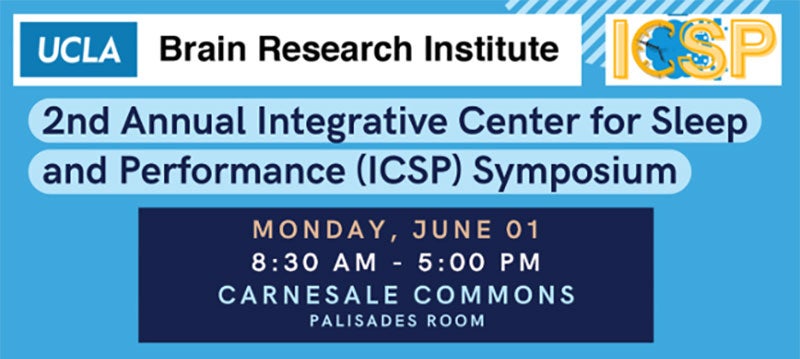
Monday June 1 8:30 AM – 5:00 PM Carnesale Commons Palisades Room Register here
Read More
Event
June 01, 2026
Monday June 1 8:30 AM – 5:00 PM Carnesale Commons Palisades Room Register here
Learn More
News
You may be eligible if: Learn more here: https://nextgensibs.org/
Learn More
News
Organized by Sahib Kalsa, MD, PhD the UCLA Embodied Minds Summit and Salon convened an interdisciplinary group of scientists, clinicians, innovators, philanthropists and artists to explore how interoception, the brain’s sensing of the body’s internal state, shapes consciousness, mental health, physical health and the future of artificial intelligence. Anchored by keynote speaker Antonia Damasio, the meeting fostered cross-disciplinary dialogue on…
Learn More
News
In April, the UCLA Prevention Center of Excellence hosted the Creative Wellbeing and Center for the Empowerment of Families teams who facilitated an interactive art experience called affirmation cubes. More than a hands-on activity, this experience reflected the heart of Creative Wellbeing’s work in LA County – using creative expression as a tool f or healing, empowerment and connection. The…
Learn More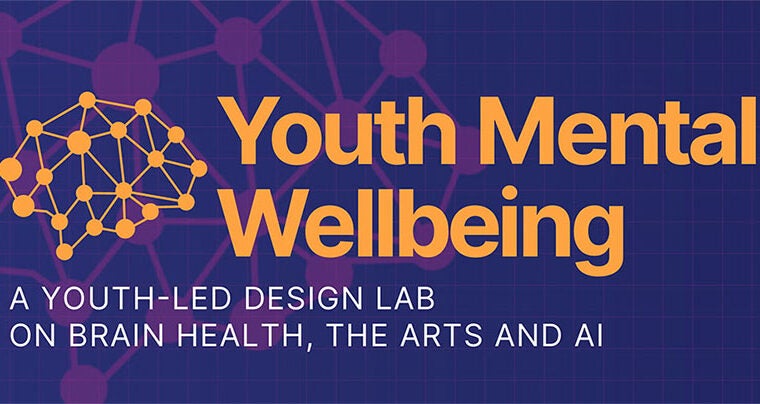
News
On May 1st, 2026, young people led the conversation at the CA Youth Mental Health Summit, bringing together leaders in government, psychiatry, technology, philanthropy, and the arts to confront the youth mental health crisis- and co-create solutions that last.
Learn More
News
The UCLA Ecological Medicine & Psychedelic Studies Initiative, part of the Jane and Terry Semel Institute for Neuroscience and Human Behavior, is investigating scientifically validated treatments for mental health. Project Reconnect will link the care and health of the natural world to the improved well-being of individuals and communities. A monthly affinity group offers lectures and other activities such as forest bathing,…
Learn More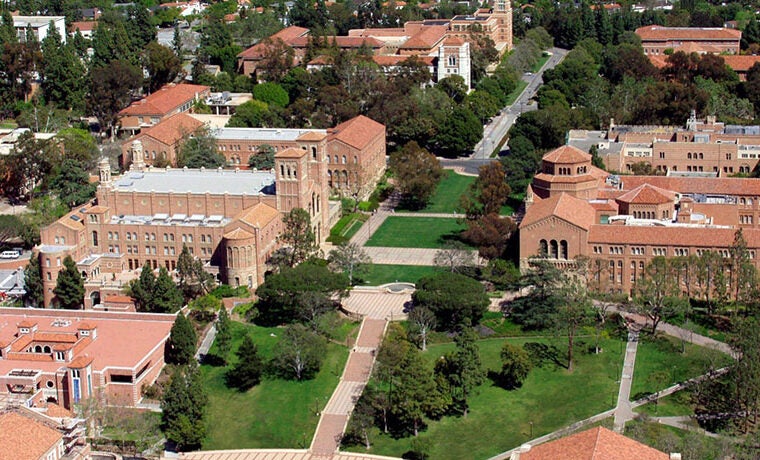
News
The Ballmer Group announced historic investments aimed at developing the pipeline of mental health professionals to transform mental health care systems for underserved populations. This includes a $5 million gift to the UCLA Child Psychiatry, Community Psychiatry, and Psychology Fellowships to develop community training tracks for child psychiatry fellows as well as postdoctoral psychologists. Read more.
Learn More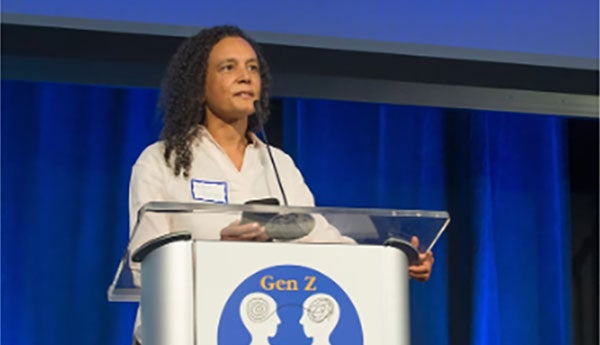
News
On Sunday, March 8, more than 400 students, parents, educators, and school leaders gathered at UCLA for the 3rd Annual Gen Z Wellness Summit, presented by the Friends of the Semel Institute Teen Advisory Council. The day focused on practical, youth-informed tools to support mental health, with sessions on academic pressure, addiction, body image and eating disorders, nutrition, social media…
Learn More
Event
May 01, 2026
On the first day of Mental Health Awareness Month — as California’s landmark Prop 1 Mental Health Accountability Act takes effect — UCLA’s Semel Institute Teen Advisory Council, well-known artists dedicated to community healing, SoCal youth organizations and OpenAI Academy will convene the people who can actually solve this: young Californians themselves. Youth Mental Wellbeing: A Youth-Led Design Lab on…
Learn More
News
The UCLA Brain Health Summit chaired by Dr. Helen Levretsky of UCLA Psychiatry and co-chaired by Dr. Sahib Khalsa of UCLA Psychiatry and Indu Subramanian of UCLA Neurology, showcased UCLA’s leadership in advancing a unifying vision of brain health across the lifespan. Bringing together experts from psychiatry, neurology, neuroscience, public health, philanthropy, technology, industry, the arts, and patient advocacy, representatives…
Learn More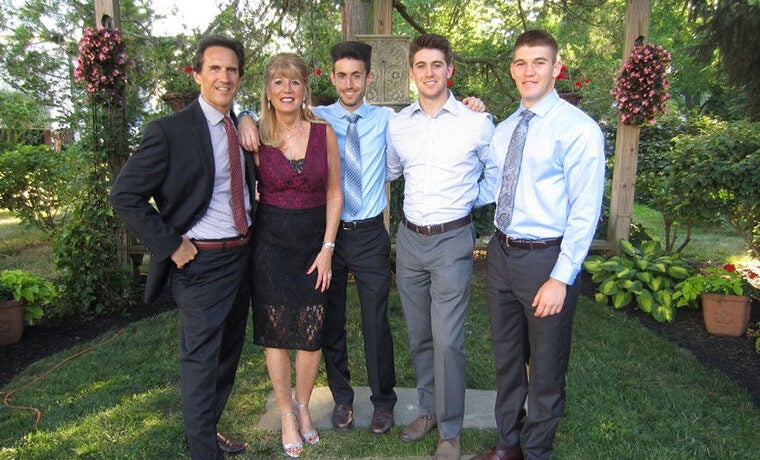
News
UCLA Health has received a $2.4 million gift from Rose and Allen Nelson to establish a new fellowship, in memory of their late son Brandon, in translation and clinical neuroscience. The fellowship will support emerging physician-scientists as they bridge research and patient care, advancing innovation in the diagnosis and treatment of complex brain disorders. Read more.
Learn More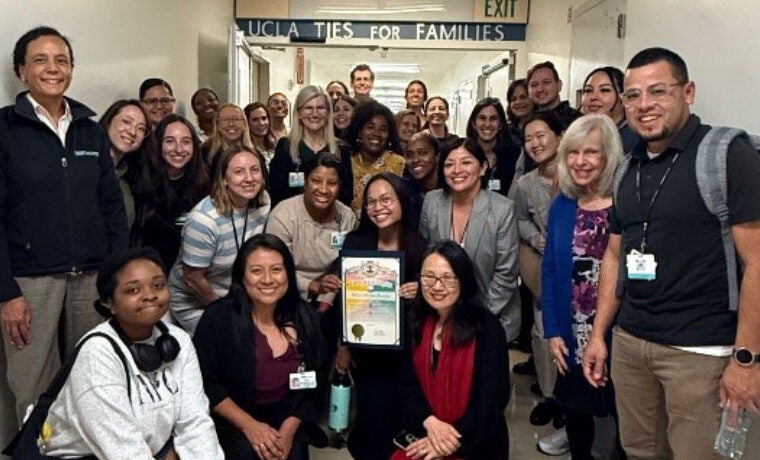
News
LA Supervisor Lindsey Horvath’s office recognized UCLA TIES for Families with a special scroll celebrating 30 years of the program’s service to the LA Community.
Learn More
News
The PEERS® for Dating Online Social Skills Classes are currently enrolling adults for their next group. Groups are held live via zoom. Learn more at www.teams.semel.ucla.edu/peers
Learn More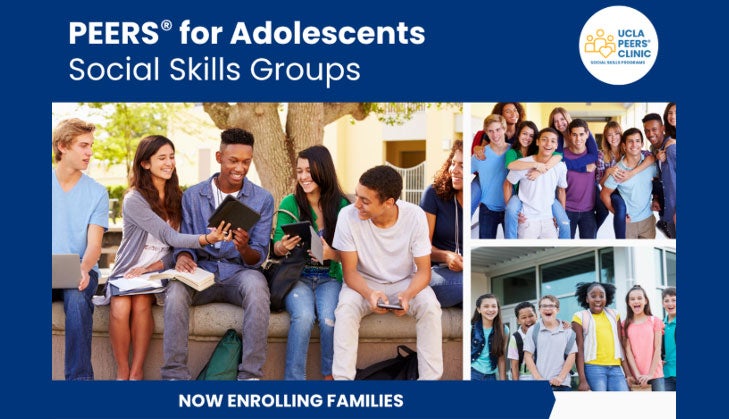
News
The PEERS® for Adolescents Social Skills Groups are currently enrolling families for in-person or online sessions. Learn more at www.teams.ucla.edu/peers
Learn More
News
The PEERS® Online Social Skills Classes for Teens & Young Adults are currently enrolling families to participate in online sessions. Learn more at www.teams.ucla.edu/peers
Learn More
News
The PEERS® for Preschoolers Parent-Only Social Skills Groups are enrolling parents to participate in online sessions. Learn more at www.teams.ucla.edu/peers
Learn More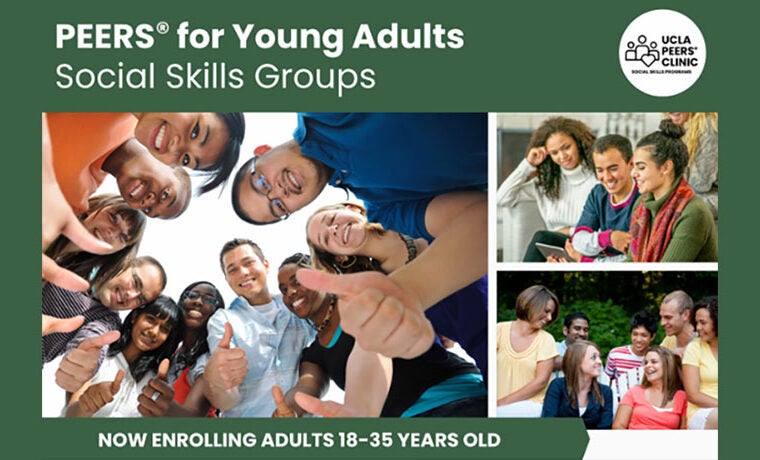
News
The PEERS® for Young Adults Social Skills Groups are currently enrolling adults 18-35 to participate in sessions online and in person. Learn more at www.teams.ucla.edu/peers
Learn MoreNews
The UCLA Family Stress, Trauma and Resilience (STAR) Clinic is offering a group for parents whose school-aged children (ages 5-12) are experiencing stress, anxiety, or persistent worrying. Learn more about the Spring group by contacting the clinic at 310-825-7573 or starclinic@mednet.ucla.edu
Learn More
Event
April 22, 2026
Wednesdays April 22 – May 27 Contact SSPC@mednet.ucla.edu for more information.
Learn More
Event
April 23, 2026
April 23, 2026 (Thursday) Register Online: https://learn.wellbeing4la.org/detail?id=401911&k=1773943760 Flyer: https://files.constantcontact.com/a59b145a201/ce57d7aa-c281-44fd-bc15-7f7113ac6bb1.png?rdr=true
Learn More
Event
April 26, 2026
Sunday, April 26, 2026 1:00 PM Register at https://www.friendsofsemelinstitute.org/events-reservations/open-mind-film-festival-2026
Learn More
Event
April 28, 2026
Tuesday, April 28, 2026 5:00 PM – 6:00 PM Register at https://www.friendsofsemelinstitute.org/events-reservations/robot-proof%3A-when-machines-have-all-the-answers%2C-build-better-people
Learn More
News
With the passing of the Patient Protection and Affordable Care Act in 2010, the “Triple Aim” of health care improved health of the US population, increased quality of care and cost containment, has become central to health-system transformation. The shifting of priorities toward population-level and value-based health has created new opportunities for innovation and program creation. In response to these changing…
Learn More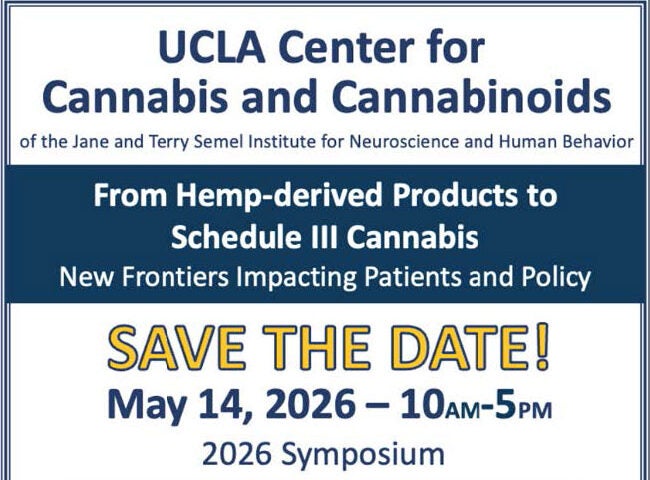
Event
May 14, 2026
UCLA Center for Cannabis and Cannabinoids 2026 Symposium May 14, 2026 10 AM – 5 PM Agenda and Registration to come
Learn More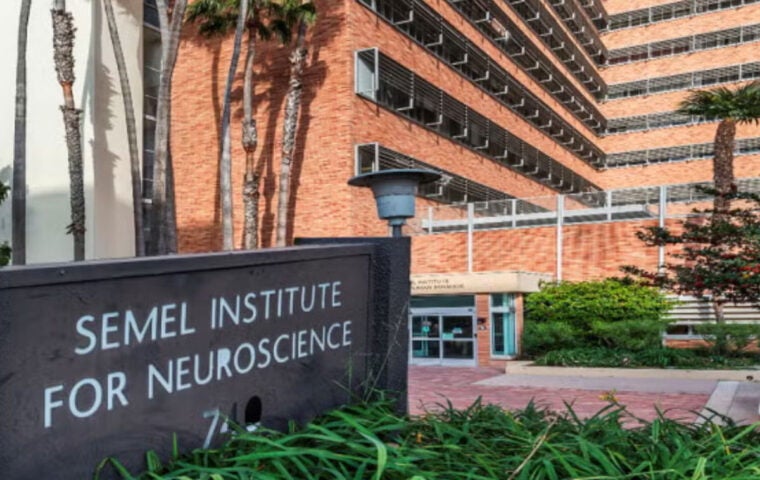
News
The Guardian Surging prediction markets face legal backlash in US: ‘Lines have been blurred’ — Expert commentary from Dr. Timothy Fong, co-director of the UCLA Gambling Studies Program, director of the UCLA Addiction Psychiatry Fellowship and professor of psychiatry at the UCLA Semel Institute for Neuroscience and Human Behavior. Oprah Daily The Future of Menopause Care— Coverage of study co-led…
Learn More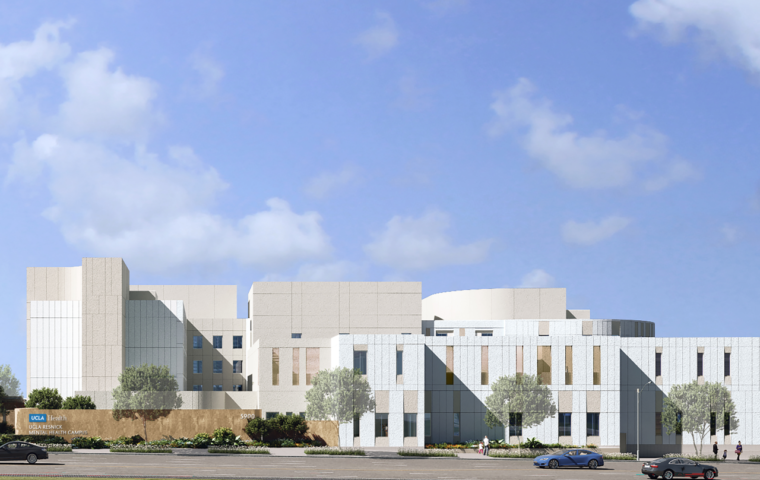
News
Donation from LA-based global philanthropists will work to address the growing mental health crisis in Los Angeles
Learn More
News
Semel Faculty and Researchers are well-known in their fields. See below for a selection of recent articles highlighting their work and expertise.
Learn More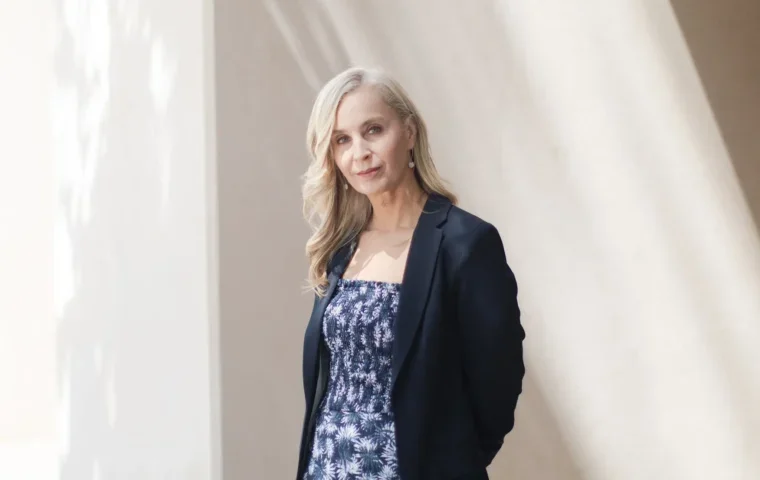
News
Dr. Elizabeth Laugeson and the UCLA PEERS™ Program’s 20-week social skills program helps adults with autism learn how to find and maintain healthy romantic relationships. Much of the coursework focuses on building comfort in conversation, or, as the coaches call it, trading information One central skill taught is not to panic if there are extended silences. Hayley Ditter, 24, who…
Learn More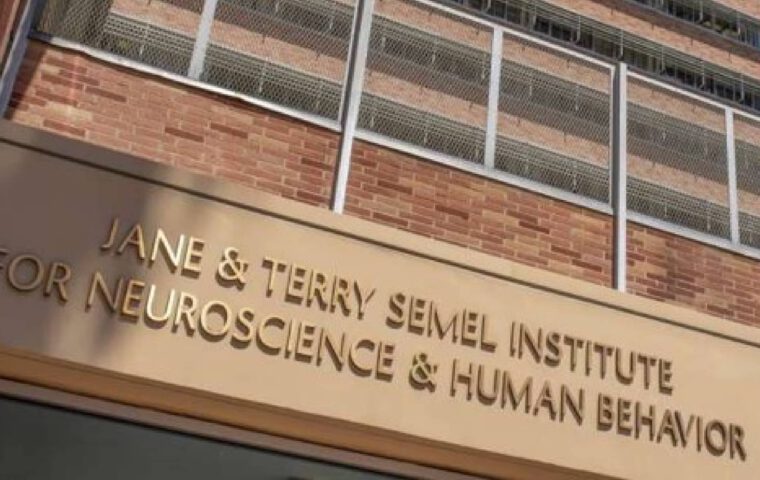
News
The UCLA Neuropsychiatric Institute (NPI) was founded in the post World War II era, as a research, education and treatment center with the mission to serve those citizens who suffer chronic psychiatric and neurological disease and behavioral disorder. Initially supported entirely by state funds from the California Department of Mental Hygiene, the Neuropsychiatric Institute, and the Hospital (NPH) that is integral to its provision of clinical care, opened their doors in 1961.
Learn More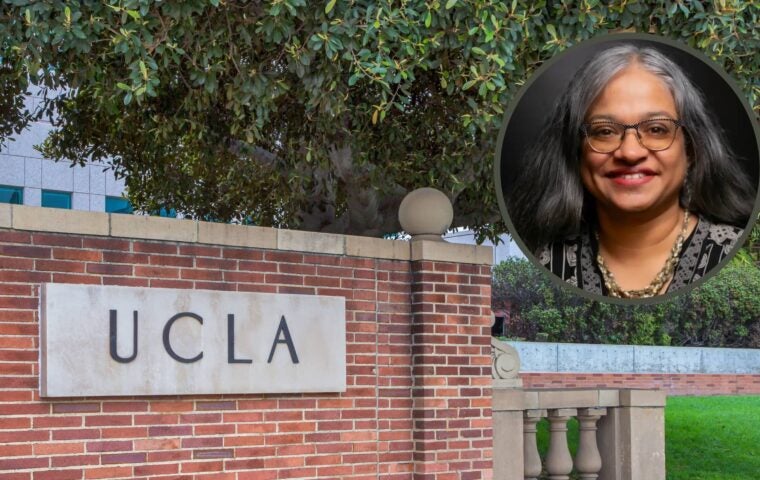
News
Suma Jacob, MD, PhD is a distinguished child-adolescent-adult psychiatrist as well as a neuroscientist who is widely recognized for her research in neuroendrocrinology and neurodevelopmental disorders across the lifespan.
Learn More
News
This year, external gifts to the Semel Institute grew to $21.5M from $18M in 2023.
Learn More