Research Center
Leadership
Linda Ercoli, PhD
Interim Director
About
The Longevity Center Mission is to help people live better, longer lives through lifelong learning, research, and community programs. It seeks to motivate and empower people to take an active role in their self-care and wellness. The center offers programming for lifelong learning through our Senior Scholars program, cognitive/memory training courses, and webinars.
Center Programs
- Brain Boot Camp
Didactics on optimal brain health, nutrition, stress management, exercise, and memory training - Memory Training
Memory enhancing techniques for people with mild memory challenges and their significant others. - Senior Scholars
A UCLA campus program for older adults 50+ to audit regular session undergraduate courses with distinguished UCLA professors at reduced fees. Enjoy an intergenerational experience without exams, reports, or prerequisites. - Webinars
Event
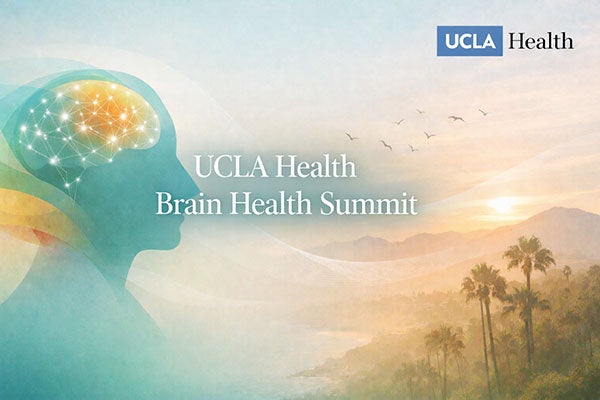
UCLA Health Brain Health Summit
Summary:
The UCLA Health Brain Health Summit brings together research, policy, and community voices to advance brain health across California.
Date and Time:
03/20/2026 — 03/21/2026 7:15 AM – 5:00 PM
Location:
UCLA Meyer and Renee Luskin Conference Center
425 Westwood Plaza, Los Angeles, CA 90095
Overview:
Welcome to the UCLA Health Brain Health Summit!
The UCLA Health Brain Health Summit will be held March 20–21, 2026, at the UCLA Luskin Center and will unite researchers, clinicians, policymakers, and communities to advance brain health across California. In an era marked by climate disasters, social upheaval, and a rapidly aging population, brain health must be recognized as a fundamental public health priority essential to individual resilience and societal well-being. Evidence-based interventions can protect function, strengthen resilience, and reduce long-term effects.
Brain health encompasses cognitive, emotional, neurological, and social functioning across the lifespan, from early development through older age. While the brain is shaped by environmental, lifestyle, and social factors, research shows that prevention, early detection, and evidence-based interventions can protect function, strengthen resilience, and reduce long-term decline. Yet access to these strategies remains uneven, particularly for underserved communities.
Brain skills such as creativity, critical thinking, adaptability, and resilience are increasingly vital in a rapidly changing world shaped by technological advances and shifting workforce demands.
Through interdisciplinary dialogue and community engagement, the UCLA Brain Health Summit will examine practical approaches to measuring brain health, translating research into action, and advancing community-based and policy solutions to address the growing brain and mental health crisis.
Sponsors:

https://www.eventbrite.com/e/ucla-health-brain-health-summit-tickets-1978177798045?aff=oddtdtcreator